
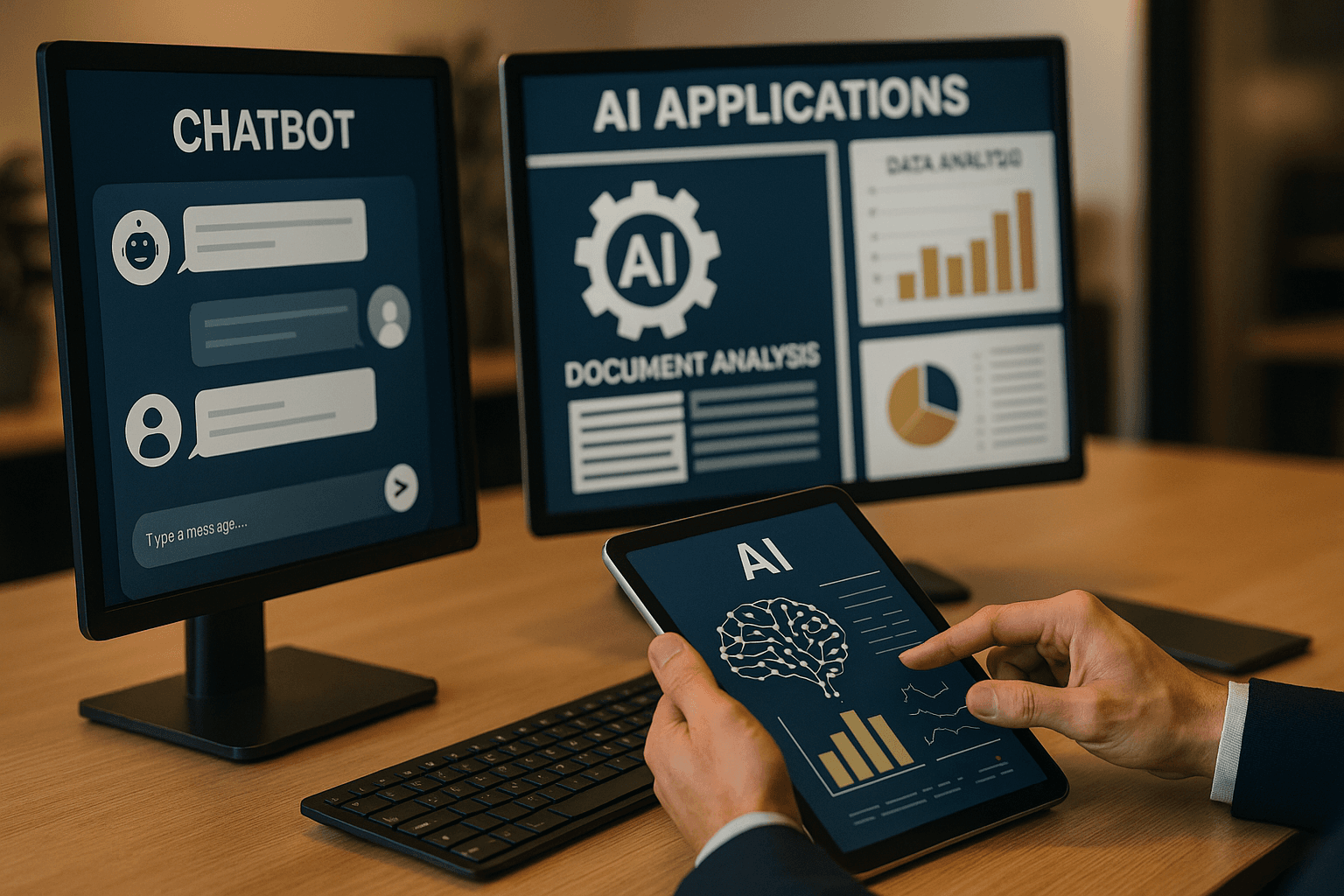
AI-Powered Reporting: From Monthly Spreadsheets to Real-Time Business Intelligence
Manual reporting wastes 20+ hours per month in most businesses. AI-automated dashboards and reports deliver real-time insights, anomaly detection, and plain-English summaries — here's how to implement them.
AI-Powered Reporting: From Monthly Spreadsheets to Real-Time Business Intelligence
Somewhere in your business right now, someone is building a report. They're pulling data from three different systems, pasting it into a spreadsheet, formatting columns, creating charts, and writing a summary that will be read by four people — two of whom will skim it and one of whom will ask for a different metric that requires rebuilding the whole thing.
This ritual happens weekly or monthly in most businesses. It consumes 20-40 hours per month of skilled people's time. And by the time anyone reads the report, the data is already stale.
AI-powered reporting eliminates this entirely. Not by making better spreadsheets, but by fundamentally changing how businesses consume information: real-time dashboards, natural language queries, automatic anomaly detection, and proactive alerts — delivered the moment something matters, not at the end of the month.
The Problem with Traditional Reporting
It's Slow
Monthly reports reflect what happened last month. By the time leadership reviews the numbers, they're making decisions based on data that's 2-6 weeks old. In a fast-moving market, that's like driving with your eyes on the rear-view mirror.
It's Expensive
A financial controller spending 8 hours building a monthly board pack is costing the business £400-800 in salary alone. Multiply by every department that produces reports (marketing, operations, sales, HR) and you're burning thousands monthly on report assembly.
It's Fragile
Reports break. Formulas go wrong. Someone changes a column in the source data and the pivot table collapses. A new hire doesn't know the formatting conventions. The "definitive" number depends on who pulled it and when.
It Answers Yesterday's Questions
Traditional reports show pre-defined metrics. But the most valuable questions are the ones you didn't think to ask in advance: Why did revenue dip on Tuesday? Which product is driving the margin increase? Are customer support tickets from Birmingham correlated with the new delivery partner?
What AI-Powered Reporting Looks Like
1. Real-Time Dashboards That Update Themselves
Instead of monthly snapshots, AI reporting connects directly to your data sources (accounting software, CRM, POS systems, web analytics) and maintains live dashboards. The data is always current.
But it goes beyond just displaying numbers. AI dashboards:
- Highlight what's changed since you last looked
- Flag anomalies automatically (revenue 15% below normal for this day)
- Show trends and predict where metrics are heading
- Contextualise numbers against benchmarks, targets, and historical patterns
2. Natural Language Queries
Instead of building a new report, you ask a question:
"How did Cardiff store perform last week compared to the same week last year?"
The AI queries your data, generates the comparison, and returns a clear answer with supporting charts — in seconds. No SQL. No pivot tables. No waiting for the analyst.
This is genuinely transformative for senior leaders who need information but don't want to learn Business Objects or navigate 47-tab spreadsheets.
3. Automated Report Generation
For those who still need formal reports (board packs, investor updates, regulatory submissions), AI generates them automatically:
- Pulls data from all relevant sources at the scheduled time
- Creates visualisations following your brand guidelines
- Writes narrative summaries explaining what the numbers mean
- Highlights variances against budget, forecast, or prior period
- Distributes via email, Slack, or your preferred channel
A monthly board pack that took a finance team 2 days now generates in 2 minutes.
4. Proactive Anomaly Detection
This is where AI reporting moves from reactive to genuinely valuable. Instead of waiting for someone to notice a problem in a report, the system monitors continuously and alerts when something needs attention:
- Revenue dropped 20% compared to the same day last week → instant alert to sales director
- Customer complaints spiked from a specific product line → notification to operations
- Cash flow forecast shows a shortfall in 3 weeks → early warning to finance
- Marketing spend exceeded daily budget by 40% → flag to marketing manager
These alerts arrive in real time — via email, SMS, Slack, or Teams — with context about what happened and potential causes.
The Technology Stack
AI-powered reporting typically combines:
| Layer | What It Does | Examples |
|---|---|---|
| Data Integration | Connects to your business systems | APIs, database connectors, webhook listeners |
| Data Processing | Cleans, transforms, and standardises | ETL pipelines, data normalisation |
| AI/ML Layer | Analyses patterns, detects anomalies | Time series analysis, NLP, forecasting models |
| Visualisation | Creates charts and dashboards | Interactive web dashboards, embedded analytics |
| Delivery | Distributes insights to the right people | Scheduled reports, real-time alerts, chat interfaces |
Integration With Common Business Systems
The power comes from connecting everything:
- Accounting: Xero, QuickBooks, Sage, FreeAgent
- CRM: HubSpot, Salesforce, Pipedrive
- E-commerce: Shopify, WooCommerce, BigCommerce
- Marketing: Google Analytics, Meta Ads, Mailchimp
- Operations: Monday.com, Asana, Notion, ServiceM8
- HR: BreatheHR, CharlieHR, BrightHR
- POS: Square, iZettle, Lightspeed
When these data sources are connected, questions that previously required manual data gathering become instant.
Implementation Approach
Phase 1: Foundation (Weeks 1-2)
- Audit existing reports — what's being produced, who reads them, what decisions they inform
- Identify data sources — map every system that contains relevant data
- Define key metrics — agree on the 10-15 KPIs that actually drive decisions
- Set up data connections — integrate primary business systems
Phase 2: Dashboards (Weeks 3-4)
- Build core dashboards — executive summary, departmental views, operational monitors
- Configure anomaly detection — set baselines and alert thresholds
- Test with real data — validate accuracy against known reports
- Train users — show the team how to ask questions and read dashboards
Phase 3: Automation (Weeks 5-6)
- Automate recurring reports — board packs, weekly summaries, regulatory submissions
- Set up alert routing — ensure the right people get the right notifications
- Deprecate manual reports — transition from spreadsheet processes
- Continuous improvement — add new data sources and refine AI models
Real-World Impact
Manufacturing Business
Before: Operations director spent every Monday morning in a 2-hour meeting reviewing last week's production data from printed spreadsheets.
After: Real-time production dashboard on a factory floor screen. Anomalies flagged immediately. Monday meetings reduced to 30 minutes focused on decisions, not data review. Quality issues caught in hours, not days.
Multi-Site Retail
Before: Each store manager submitted weekly sales reports via email. Regional manager spent Friday afternoons compiling them into a summary for the MD.
After: Unified dashboard showing all stores in real time. Automatic weekly summary generated and emailed Sunday evening. Regional manager redeployed to coaching and strategy. Underperforming stores identified and supported within days, not weeks.
Professional Services Firm
Before: Finance team spent 3 days per month producing partner revenue reports, utilisation analysis, and client profitability summaries.
After: Live partner dashboard showing billing, utilisation, and pipeline in real time. Automated monthly P&L by client and partner. Finance team redirected 3 days per month to advisory work.
Costs and ROI
| Business Size | Typical Monthly Cost | Time Saved | Estimated Value |
|---|---|---|---|
| Small (1-10 staff) | £200-500 | 15-20 hours/month | £1,000-2,000 |
| Medium (10-50 staff) | £500-1,500 | 40-80 hours/month | £3,000-8,000 |
| Large (50-250 staff) | £1,500-5,000 | 100+ hours/month | £10,000-25,000 |
But the time savings are just the direct cost. The real ROI comes from:
- Faster decisions — catching problems days or weeks earlier
- Better decisions — based on current data, not stale reports
- Team redeployment — analysts doing analysis instead of assembly
- Revenue protection — anomaly detection catching issues before they become crises
Common Mistakes to Avoid
Don't try to replicate every existing report. Most businesses have reports that nobody reads. Use the transition as an opportunity to ask: "What decisions does this report actually inform?" If the answer is "none," kill it.
Don't ignore data quality. AI reporting is only as good as the underlying data. If your CRM hasn't been updated in months, the dashboard will reflect that. Clean your data first.
Don't over-customise initially. Start with standard dashboards and standard metrics. Customise once you understand how people actually use the system. The biggest waste is building elaborate dashboards that nobody opens.
Don't skip the human element. AI generates insights. Humans make decisions. The goal is to deliver the right information to the right person at the right time — not to automate decision-making itself.
Getting Started
If your business still relies on manually assembled reports, automated reporting is one of the most impactful AI investments you can make. It touches every department, saves real time, and — critically — improves the quality and speed of decision-making across the organisation.
Start with your most painful report. The one that takes the longest to produce, is always late, and is always slightly wrong. Automate that first. The momentum from seeing it work will carry the rest.
Drowning in manual reports? Get in touch and we'll show you what automated business intelligence looks like for your specific setup.