
AI Edge Computing & Smart Offices: How IoT Meets Intelligence for UK Businesses
Edge AI is moving intelligence from the cloud to the device. UK businesses are using smart sensors, on-device inference, and IoT platforms to cut latency, reduce costs, and build responsive workplaces in 2026.
AI Edge Computing & Smart Offices: How IoT Meets Intelligence for UK Businesses
Most businesses think of AI as something that lives in the cloud — you send data up, get answers back. That model works for many use cases, but it has fundamental limitations: latency, bandwidth costs, privacy concerns, and a dependency on internet connectivity that makes it fragile.
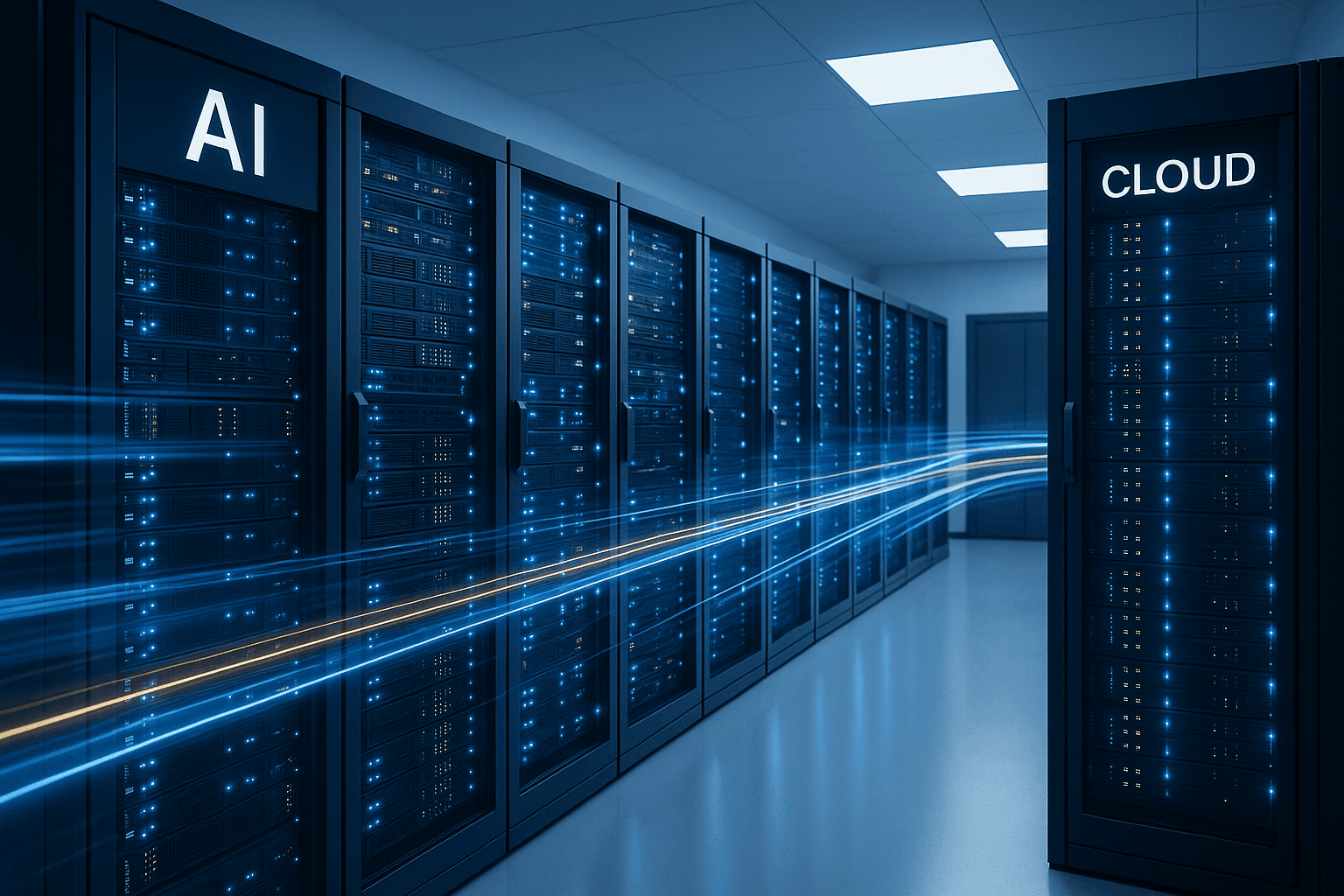
Edge AI flips the model. Instead of sending raw data to the cloud for processing, you push intelligence to the device itself. The sensor, camera, or controller runs AI models locally, making decisions in milliseconds rather than seconds. The cloud still plays a role — training models, aggregating insights, managing fleets of devices — but the real-time action happens at the edge.
For UK businesses in 2026, this isn't theoretical. It's practical, affordable, and increasingly essential.
Why Edge AI Matters for Business
Speed That Cloud Can't Match
A cloud-based AI system processing a camera feed introduces 100-500ms of latency at best. For a quality inspection on a production line running at speed, or a safety system detecting a person in a restricted zone, that delay is unacceptable.
Edge AI processes data locally in single-digit milliseconds. The decision to stop a machine, flag a defect, or trigger an alert happens before the data would even reach the cloud.
Cost Efficiency at Scale
Streaming video from 50 cameras to cloud AI for analysis costs a fortune in bandwidth and compute. Running lightweight models on edge devices costs a fraction — the processing happens on hardware you already own, and only meaningful events get sent to the cloud.
A UK manufacturing client reduced their cloud AI spend by 73% by moving quality inspection models to edge devices on the factory floor.
Privacy by Design
Edge processing means sensitive data never leaves the premises. For businesses handling CCTV footage, employee monitoring, or customer interactions, this simplifies GDPR compliance enormously. The AI analyses data locally and only transmits anonymised insights or alerts.
Resilience
Cloud-dependent systems fail when the internet drops. Edge AI continues operating regardless of connectivity. For businesses with remote sites, warehouses, or vehicles, this reliability is non-negotiable.
Smart Office: The Most Accessible Entry Point
You don't need a factory floor to benefit from edge AI. The modern office is full of opportunities:
Intelligent Environment Control
Smart sensors detect occupancy room by room and adjust heating, lighting, and ventilation in real time. Not just "motion detected, lights on" — AI models learn usage patterns, predict when rooms will be occupied, and pre-condition spaces. The result: 20-35% reduction in energy costs with better comfort.
Practical setup: Occupancy sensors (£20-50 each) connected to a hub running edge AI models, integrated with your building management system. The AI learns that the meeting room on floor 2 is always used at 9am on Mondays and pre-heats it from 8:45am.
Meeting Room Optimisation
How many meetings actually happen in booked rooms? Edge AI with occupancy sensing tracks real usage, automatically releases no-show bookings after 10 minutes, and provides data to right-size your office space. One London firm discovered 40% of their meeting room bookings went unused — they consolidated two floors into one.
Air Quality Monitoring
CO2 sensors with edge AI detect when a room's air quality drops and automatically increase ventilation. High CO2 correlates directly with reduced cognitive performance — keeping levels optimal measurably improves productivity. The AI balances air quality against energy cost, ventilating just enough.
Smart Desk Booking
Hot-desking works poorly when people can't find available desks. Edge sensors on desks detect presence (not just booking) and update a live floor map. AI predicts demand patterns and suggests optimal seating arrangements — keeping teams close together on quiet days, spreading load on busy ones.
Industrial & Warehouse Applications
This is where edge AI really earns its keep:
Predictive Maintenance
Vibration sensors on machinery run AI models that detect anomalies before failures occur. A bearing that's starting to wear produces subtle vibration signatures that edge AI catches weeks before a human would notice. The model runs on the sensor itself — no cloud dependency, no latency.
ROI: Unplanned downtime typically costs UK manufacturers £10,000-50,000 per hour. Catching issues early with edge AI pays for the entire sensor deployment within months.
Quality Inspection
Camera-based quality inspection at production line speed requires edge processing. Cloud round-trips are too slow. Edge AI running on compact GPU units (like NVIDIA Jetson) can inspect hundreds of items per minute, flagging defects with sub-millimetre accuracy.
Safety Monitoring
Edge AI processes camera feeds to detect PPE compliance (hard hats, high-vis, safety boots), restricted zone intrusions, and unsafe behaviours. Alerts are instant — the processing happens on-site rather than waiting for cloud analysis.
Energy Management
Smart meters and sensors across a facility feed edge AI that optimises energy consumption in real time. The AI learns production schedules, weather patterns, and energy tariff structures to minimise costs while maintaining operations.
Retail & Hospitality
Footfall Analytics
Edge AI processes camera feeds locally to count visitors, track movement patterns, and identify queue lengths — all without sending identifiable images anywhere. The insights help with staffing decisions, store layout optimisation, and marketing effectiveness.
Inventory Monitoring
Smart shelves with weight sensors and edge AI detect stock levels in real time. When a shelf drops below threshold, the system triggers restocking alerts. Computer vision on edge devices can even identify misplaced items or planogram compliance.
Kitchen & Food Safety
Temperature sensors with edge AI in commercial kitchens continuously monitor fridges, freezers, and cooking stations. The AI doesn't just check if temperature is in range — it detects drift patterns that predict equipment failure. Automatic logging satisfies food safety audit requirements.
The Technology Stack
A typical edge AI deployment for a UK SME looks like this:
Sensors & Devices
- Environmental: Temperature, humidity, CO2, occupancy (£10-50 per sensor)
- Visual: AI-capable cameras with on-device processing (£100-500 each)
- Industrial: Vibration, acoustic, power monitoring sensors (£50-200 each)
Edge Processing
- Lightweight: Raspberry Pi 5 with AI HAT (£80-100) — good for sensor data processing
- Mid-range: NVIDIA Jetson Orin Nano (£200-400) — handles computer vision tasks
- Enterprise: Intel NUC or HPE Edgeline — for multi-camera, multi-model deployments
Software
- TensorFlow Lite / ONNX Runtime — for running models on constrained hardware
- Home Assistant / Node-RED — for DIY smart office automations
- Azure IoT Edge / AWS Greengrass — for enterprise-scale fleet management
- Balena — for managing fleets of edge devices remotely
Cloud Integration
Edge devices send aggregated insights (not raw data) to cloud dashboards for trend analysis, model retraining, and cross-site comparisons. This keeps bandwidth minimal while providing strategic visibility.
Getting Started: A Practical Roadmap
Month 1: Identify & Pilot
- Pick one use case with clear ROI: meeting room optimisation, energy monitoring, or quality inspection
- Deploy 5-10 sensors with a single edge processing hub
- Measure baseline metrics before AI activation
Month 2: Validate & Tune
- Activate edge AI models and compare against baseline
- Fine-tune detection thresholds and alert rules
- Gather user feedback (is it useful? Too many false alerts?)
Month 3: Expand & Integrate
- Roll out to additional areas or use cases
- Connect edge insights to existing business systems (BMS, ERP, dashboards)
- Build internal capability for ongoing management
Month 4+: Scale & Optimise
- Deploy across multiple sites
- Retrain models with local data for improved accuracy
- Explore advanced use cases: predictive models, cross-sensor correlation
Common Pitfalls
Over-engineering the pilot. Start with commodity hardware and proven models. You don't need custom silicon for meeting room sensors.
Ignoring network infrastructure. Edge devices still need local network connectivity (usually Wi-Fi or PoE). A flaky network undermines the whole deployment.
Not planning for model updates. Edge models need periodic retraining as conditions change. Build remote update capability from day one.
Forgetting physical security. Edge devices in public or semi-public areas need tamper protection. A £400 Jetson module walking off defeats the purpose.
UK-Specific Considerations
Data Protection: Edge processing is your friend for GDPR. Processing video locally and never transmitting identifiable images dramatically simplifies your data protection obligations. Document your processing basis under Article 6 and ensure signage for CCTV.
Building Regulations: Smart building modifications may require consultation with your landlord or building management. Hardwired sensors in commercial premises may need Part P certification for electrical work.
Energy Regulations: If you're using edge AI to optimise energy consumption, your data may be valuable for Energy Savings Opportunity Scheme (ESOS) compliance — a regulatory requirement for large UK enterprises.
The Bottom Line
Edge AI isn't futuristic — it's the practical, cost-effective layer that makes AI work for physical business operations. The cloud is great for training models and strategic analytics, but the real-time decisions that save money, prevent accidents, and improve operations happen at the edge.
The UK businesses getting ahead in 2026 aren't just using AI in the cloud. They're pushing intelligence to every sensor, camera, and device in their operations. The hardware is affordable, the software is mature, and the ROI is measurable within months.
Start small, prove value, then scale. That's the edge AI playbook.