
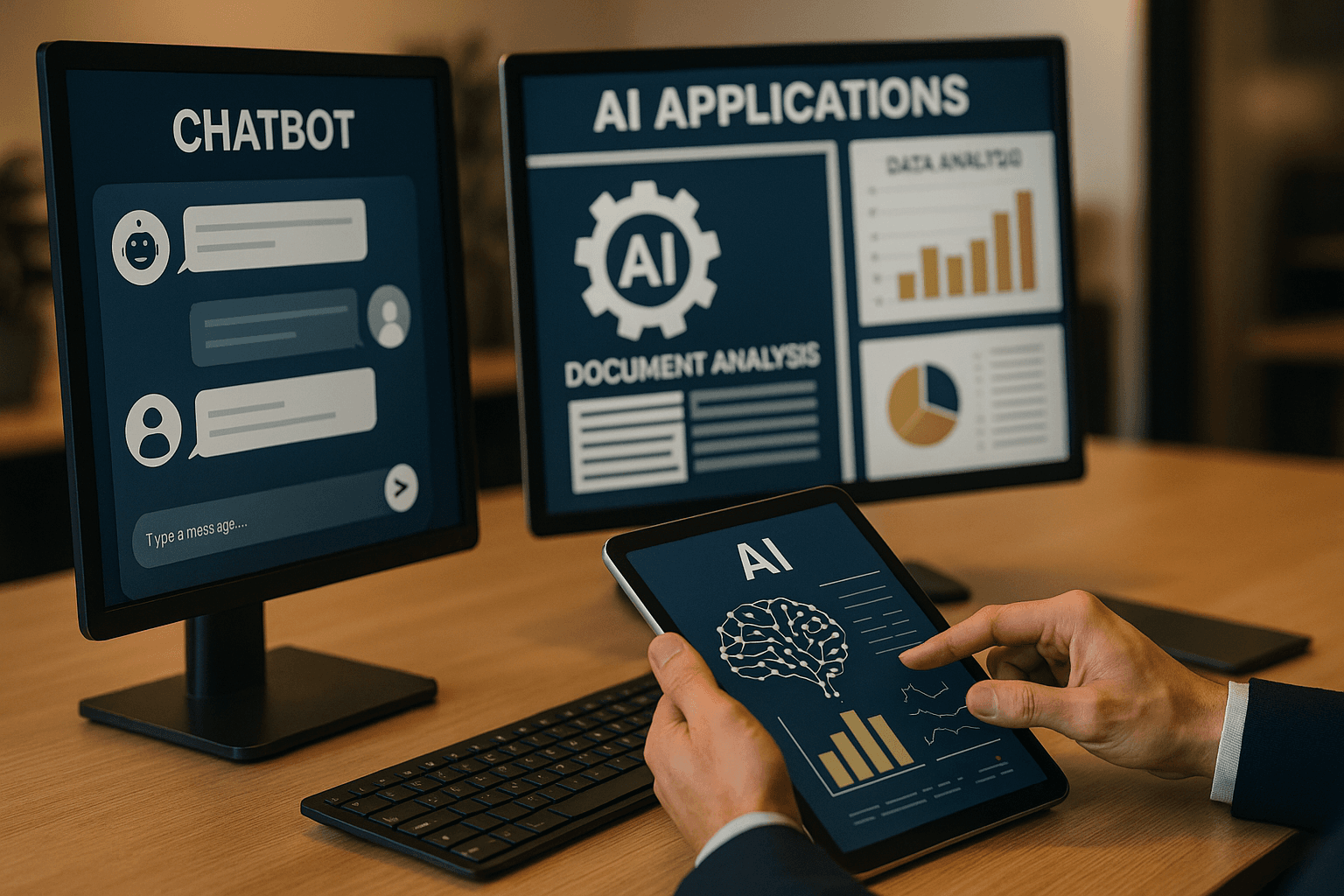
AI Payroll & HR Admin: How UK Businesses Are Automating the Work Nobody Wants to Do
AI is transforming payroll processing, HR administration, and people operations for UK businesses. From automated RTI submissions to intelligent absence management, discover how AI agents handle the admin that buries HR teams.
AI Payroll & HR Admin: How UK Businesses Are Automating the Work Nobody Wants to Do
Nobody started a business because they love processing payroll. Nobody went into HR because calculating holiday entitlement pro-rata for a part-timer who started mid-month and works irregular hours sounded thrilling.
Yet for the UK's 5.5 million businesses, payroll and HR administration consumes a staggering amount of time, money, and mental energy. The average UK SME with 20-50 employees spends 15-25 hours per month on payroll alone — and that's before you count the wider HR admin: absence tracking, pension auto-enrolment, P11D submissions, right-to-work checks, contract changes, and the endless stream of employee queries.
AI isn't replacing your HR team. It's replacing the soul-crushing admin that prevents your HR team from doing the work that actually matters: developing people, building culture, and supporting growth.
The True Cost of Manual HR Admin
Before exploring solutions, let's be honest about the problem.
Payroll Processing
UK payroll is uniquely complex. PAYE, National Insurance (with multiple categories), student loan deductions (Plan 1, Plan 2, Plan 4, Plan 5, postgraduate), pension auto-enrolment staging, salary sacrifice schemes, statutory payments (SSP, SMP, SPP, ShPP, SAP), attachment of earnings orders, and Real Time Information (RTI) submissions to HMRC.
For a 50-person company, a single payroll run involves:
- Gathering variable data — overtime, commission, expenses, absence adjustments, new starters, leavers
- Processing calculations — gross to net for each employee, accounting for all deductions and statutory requirements
- Submissions — Full Payment Submission (FPS) to HMRC on or before each payday, Employer Payment Summary (EPS) monthly
- Outputs — payslips, bank file (BACS), pension contributions file, accounting journals
- Queries — "Why is my pay different this month?" (repeated 5-10 times per pay run)
Even with payroll software, the data gathering and exception handling takes 8-15 hours per monthly payroll for a 50-person company. Weekly payrolls multiply the pain.
Absence and Leave Management
The UK's statutory leave entitlement (28 days including bank holidays for full-time workers) seems simple until you encounter:
- Part-time workers with varying patterns
- Compressed hours arrangements
- Workers who joined or left mid-year
- Carried-over leave from previous year
- Enhanced contractual entitlements
- TOIL (time off in lieu) balances
- Sickness absence and return-to-work processes
Most HR teams spend 5-8 hours per week managing leave requests, updating records, chasing managers for approvals, and answering "how many days do I have left?" queries.
Compliance and Record-Keeping
UK employment law requires employers to maintain accurate records for:
- Working time (48-hour week opt-outs, rest breaks)
- Right-to-work documentation (with specific check, copy, and retention requirements)
- Pension auto-enrolment (eligibility assessment, communications, opt-out tracking)
- Gender pay gap reporting (for 250+ employee organisations)
- Holiday pay calculations (including the Harpur Trust v Brazel implications for irregular-hours workers)
Getting any of this wrong carries real financial penalties. HMRC late filing penalties start at £100 per 50 employees per month. Auto-enrolment non-compliance can reach £10,000 per day.
Where AI Changes the Game
AI in HR admin isn't about replacing payroll software or HRIS platforms. It's about adding an intelligent layer on top that handles the judgment calls, exception management, and communication that currently require human intervention.
AI Payroll Agents
Modern AI payroll agents sit between your people and your payroll system, handling the workflow around payroll processing:
Pre-payroll data gathering:
- AI agents chase managers for overtime approvals and variable pay submissions via Slack, Teams, or email
- Automatic detection of missing timesheets with intelligent reminders ("Sarah, 3 of your team haven't submitted timesheets for this week. The payroll deadline is Thursday 2pm.")
- Smart expense processing — AI reads receipt images, categorises expenses, flags policy violations, and prepares data for payroll inclusion
Exception handling:
- AI identifies anomalies before processing: "James's overtime is 47 hours this month vs. his 12-month average of 8 hours. Flag for manager review?"
- Automatic SSP calculations when absence hits the qualifying threshold, including waiting days and linked periods of incapacity
- New starter onboarding — AI collects tax code (or applies 1257L/BR/0T based on starter declaration), pension eligibility date, student loan plan from SLC notification
Post-payroll support:
- AI-powered payslip queries: "Your net pay is £127 less this month because your student loan threshold adjustment took effect and your pension contribution increased from 3% to 5% under auto-escalation"
- Automatic P45/P60 distribution
- Variance reporting — AI generates exception reports highlighting significant changes from the previous period, with explanations
HMRC submissions:
- RTI filing monitoring — AI verifies FPS data before submission, flags discrepancies, and confirms successful filing
- EPS preparation — automatic calculation of reclaimed statutory payments, apprenticeship levy, employment allowance
- Year-end processing — P11D data collection, P60 generation, and submission coordination
AI Absence Management
This is one of the highest-impact areas because it touches every employee, every manager, and every week.
Intelligent request handling:
- Employees request leave via natural language: "Can I have next Friday off?" → AI checks entitlement, team coverage, blackout dates, and either approves automatically (within policy) or routes to the right manager
- Clash detection: "Approving this would leave the warehouse with only 1 person on Thursday. Alternative dates with better coverage: the following Monday or the Wednesday before"
- Automatic pro-rata calculation for any working pattern, including term-time workers and annualised hours
Sickness absence management:
- Day-one notifications to managers with cover suggestions
- Automatic SSP eligibility tracking and calculation
- Return-to-work prompts to managers after absence
- Pattern detection: "This is Alex's 4th Monday absence in 3 months. This may warrant a welfare conversation"
- Fit note tracking and expiry alerts
- Occupational health referral triggers based on policy thresholds
Holiday pay compliance:
- The nightmare of calculating holiday pay for workers with variable earnings (overtime, commission, regular allowances) is a perfect AI use case
- AI maintains rolling 52-week reference periods (less weeks not worked), calculates average weekly remuneration, and applies the correct rate to each leave booking
- Harpur Trust implications for part-year workers handled automatically
AI Employee Self-Service
Perhaps the most universally appreciated application: AI agents that answer the questions employees currently email HR about.
Common queries handled automatically:
- "What's my holiday balance?" → AI checks HRIS, calculates including any pending requests and pro-rata adjustments
- "How do I claim expenses?" → AI walks through the policy and process, can even start the claim
- "I'm having a baby in July — what are my entitlements?" → AI provides personalised breakdown of maternity/paternity/shared parental leave options, pay calculations, and key dates based on the employee's specific circumstances
- "Can I change my pension contribution?" → AI explains options, implications (including salary sacrifice tax savings), and processes the change
- "I need a reference for a mortgage" → AI generates standard employment reference letter
Impact: 60-80% of routine HR queries resolved without human involvement. HR team reclaims 10-15 hours per week.
Implementation for UK SMEs
The Pragmatic Stack
Most UK SMEs don't need a complete platform replacement. The practical approach:
-
Keep your existing payroll software — Sage, Xero, BrightPay, IRIS, whatever works. These handle the calculation engine and HMRC submissions well.
-
Add AI workflow automation — agents that handle the data gathering, exception management, and employee communication around payroll and HR processes.
-
Integrate with your communication tools — Slack, Teams, WhatsApp, email. Meet employees where they already are.
-
Build a knowledge base — your policies, procedures, and precedents become the AI's training data. When an employee asks a question, the AI answers based on your specific policies, not generic advice.
Phase 1: Employee Self-Service (Week 1-4)
Start with the quickest win. Deploy an AI assistant that can answer employee queries about leave balances, policies, and procedures. This requires:
- Digitising your employee handbook and HR policies
- Connecting to your HRIS for real-time data
- Setting up the communication channel (Teams bot, Slack app, or web chat)
Expected impact: 50-60% reduction in routine HR queries within the first month.
Phase 2: Absence Management (Week 4-8)
Automate the leave request and absence management workflow:
- Automated request processing with policy-based approvals
- Team calendar integration for clash detection
- SSP tracking and calculation
- Management reporting and alerts
Expected impact: 70% reduction in time spent on absence administration.
Phase 3: Payroll Workflow (Week 8-16)
This is the most complex phase because it touches financial processes:
- Automated pre-payroll data gathering and chasing
- Exception detection and flagging
- Post-payroll query handling
- Variance reporting
Expected impact: 40-50% reduction in payroll processing time, near-elimination of payroll queries to HR.
Phase 4: Compliance Automation (Ongoing)
Layer in the compliance monitoring:
- Right-to-work document expiry alerts
- Pension re-enrolment date tracking
- Working time regulation monitoring
- Policy review reminders
The Numbers
For a UK business with 50-100 employees:
| Category | Monthly Time Saved | Annual Value |
|---|---|---|
| Payroll processing and queries | 12-20 hours | £8,000 - £14,000 |
| Absence management | 15-25 hours | £10,000 - £17,000 |
| Employee queries (general HR) | 20-30 hours | £14,000 - £21,000 |
| Compliance monitoring | 5-10 hours | £3,500 - £7,000 |
| Total | 52-85 hours/month | £35,500 - £59,000 |
Implementation costs typically range from £10,000-£30,000 in the first year, with ongoing costs of £500-£2,000 per month depending on complexity and employee count.
More importantly, the qualitative benefits are significant: fewer errors (each payroll error costs an average of £75 to investigate and correct), better compliance, happier employees (who get instant answers instead of waiting 3 days for HR to respond), and an HR team that can focus on strategic work instead of administrative firefighting.
What AI Can't (and Shouldn't) Replace
Let's be clear about the boundaries:
- Disciplinary and grievance processes — AI can track procedures and deadlines, but human judgment is essential for conduct and performance matters
- Redundancy consultation — legal requirements demand genuine human consultation
- Complex employee relations — mental health support, workplace conflicts, sensitive conversations
- Strategic workforce planning — deciding who to hire and how to structure teams
- Culture building — the human elements that make people want to work for you
The point isn't to remove humans from HR. It's to remove the admin from humans in HR.
GDPR and Data Protection
UK HR data is almost entirely "special category" personal data under UK GDPR. Any AI system processing this data must:
- Have a clear lawful basis (typically legitimate interests or legal obligation for payroll; consent may be needed for AI-specific processing)
- Implement data minimisation — AI agents should access only the data needed for the specific task
- Maintain audit trails — every AI decision and data access logged
- Enable human override — employees must be able to request human review of any automated decision
- Handle subject access requests — your AI system must be able to identify and export all data held about an individual
The good news: most UK payroll and HR software already meets these requirements. The AI layer inherits these protections when properly integrated.
The Bigger Picture
The UK has a productivity problem. Output per hour worked has flatlined since 2008. Meanwhile, the burden of employment administration keeps growing — new pension requirements, expanding statutory entitlements, increasing compliance obligations.
AI doesn't solve the productivity problem by making people work harder. It solves it by eliminating the administrative drag that slows everything down. When your HR manager spends Monday morning reviewing leave requests instead of planning the training programme that would upskill your warehouse team, everyone loses.
The businesses that will win the talent war in 2026 aren't necessarily the ones paying the highest salaries. They're the ones where the employee experience is frictionless — where getting a question answered, requesting leave, or understanding your payslip doesn't require navigating a bureaucratic maze.
AI makes that possible. Not someday. Now.
Want to automate the HR admin that's eating your team's time? Talk to us about building intelligent payroll and HR workflows for your business.