
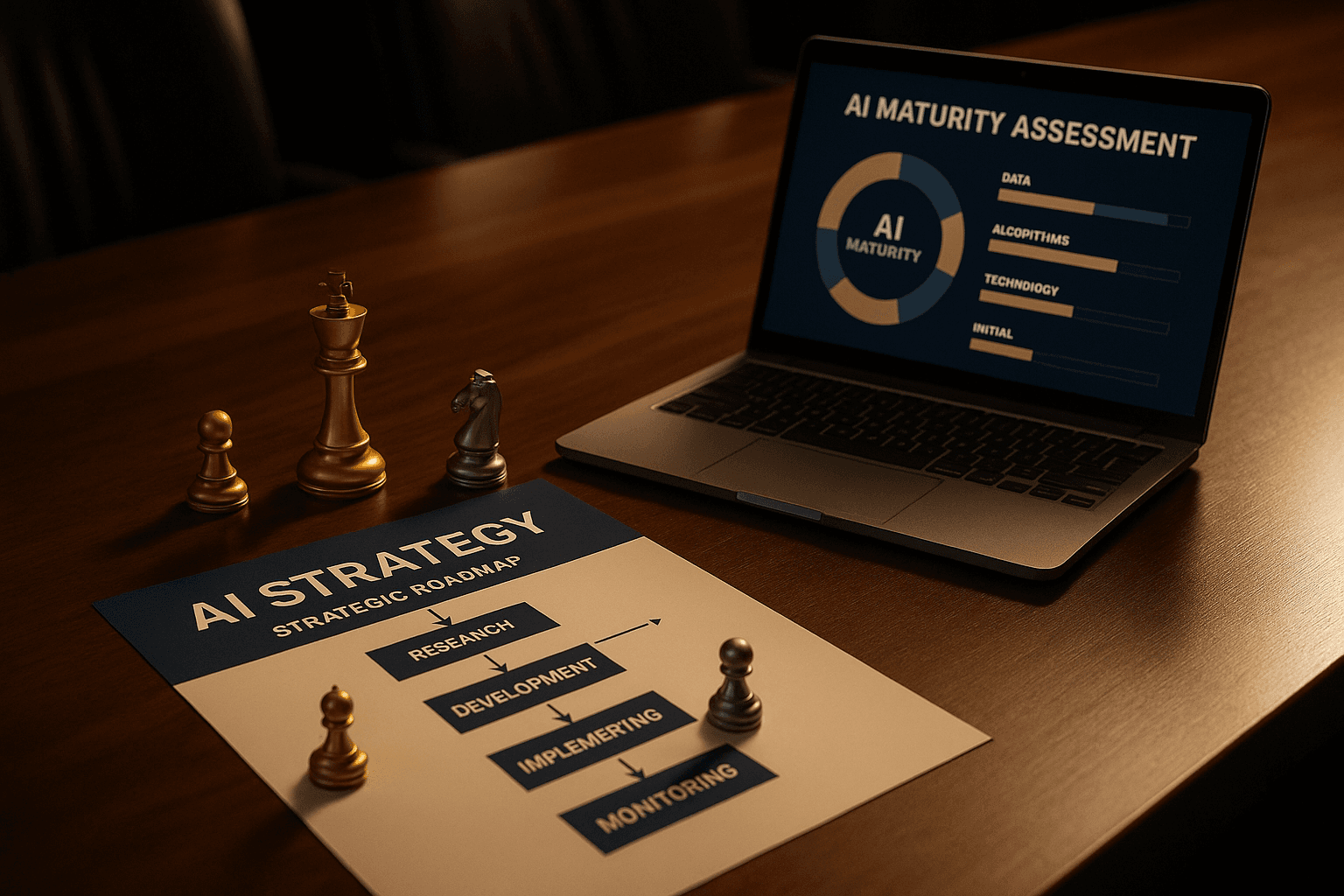
Generative Engine Optimisation (GEO): How to Get Your Business Found by AI Search in 2026
Google AI Overviews, ChatGPT Search, Perplexity, and Gemini are changing how customers find businesses. Learn how UK companies can optimise for AI-powered search engines with practical GEO strategies that work alongside traditional SEO.
Generative Engine Optimisation (GEO): How to Get Your Business Found by AI Search in 2026
The way people find businesses has fundamentally changed — and most companies haven't noticed.
In 2025, Google rolled out AI Overviews globally. ChatGPT launched integrated web search. Perplexity went mainstream. Gemini became the default assistant on hundreds of millions of Android devices. By early 2026, an estimated 40% of business research queries now receive an AI-synthesised answer before the user ever sees a traditional link.
This isn't a minor tweak to SEO. It's a paradigm shift.
If your business content isn't structured for AI consumption, you're becoming invisible to a growing segment of your potential customers. They're asking AI "who's the best AI consultancy in Cardiff?" or "which UK company can automate my invoice processing?" — and getting answers. Just not yours.
Welcome to Generative Engine Optimisation (GEO) — the discipline of ensuring AI search engines cite, reference, and recommend your business.
What Is GEO and Why Does It Matter?
Generative Engine Optimisation is the practice of structuring your content, data, and online presence so that AI-powered search engines — not just traditional search crawlers — can understand, trust, and cite your business in their generated responses.
Traditional SEO focused on:
- Keyword density and placement
- Backlink profiles
- Page speed and technical factors
- Meta tags and structured data
GEO builds on all of that but adds critical new dimensions:
| Factor | Traditional SEO | GEO |
|---|---|---|
| Goal | Rank in link results | Be cited in AI answers |
| Content style | Keyword-optimised pages | Clear, authoritative, quotable statements |
| Trust signals | Backlinks, domain authority | Consistent facts across sources, citations, expertise signals |
| Structure | HTML tags, schema | Structured data + natural language clarity |
| Discovery | Googlebot crawling | Multiple AI crawlers (GPTBot, ClaudeBot, PerplexityBot, etc.) |
The Numbers
- 62% of UK adults used an AI assistant for search at least once in January 2026 (Ofcom Digital Habits Report)
- AI Overviews now appear on 35-45% of informational queries in Google UK
- Perplexity processes over 200 million queries per month globally
- ChatGPT Search is the default for 180+ million ChatGPT Plus subscribers
- Zero-click searches (where users get their answer without clicking through) have risen to 58% in the UK
If you're only optimising for traditional search rankings, you're optimising for a shrinking slice of discovery.
The AI Search Ecosystem in 2026
Understanding where your customers are searching is the first step.
Google AI Overviews
Google's AI-generated summaries appear at the top of search results for informational queries. They synthesise information from multiple sources and occasionally cite them. Being cited here is enormously valuable — it's prime real estate.
ChatGPT Search
OpenAI's integrated search pulls from the web in real-time. When users ask ChatGPT a question, it can now browse, cite sources, and recommend businesses. It tends to favour content that's clearly written, factually precise, and from authoritative domains.
Perplexity
The "answer engine" that's become the go-to for research-heavy queries. Perplexity always cites its sources with numbered references, making it one of the best platforms for driving traffic if you're cited.
Gemini (Google)
Built into Android, Google Workspace, and Chrome. When someone asks Gemini "find me a good automation consultant in the UK," it draws from Google's knowledge graph, search index, and structured data.
Apple Intelligence
Siri's AI upgrade uses a mix of on-device processing and server-side AI. It pulls from Apple Maps, web data, and app data to answer queries about local businesses and services.
7 Practical GEO Strategies for UK Businesses
1. Write Quotable, Citeable Content
AI search engines extract and cite specific statements. Vague, fluffy content gets ignored.
Bad (traditional SEO):
"We offer world-class digital transformation services that help businesses achieve their goals through innovative solutions."
Good (GEO-optimised):
"Caversham Digital helps UK SMEs automate repetitive business processes using AI agents. Our clients typically reduce manual admin time by 60-80% within the first 90 days of implementation."
The second version contains:
- Specific claims (60-80% reduction, 90 days)
- Clear subject (UK SMEs)
- Concrete action (automate repetitive processes)
- Measurable outcomes (reduced admin time)
AI models are trained to identify and surface factual, specific, useful statements. Give them something worth quoting.
2. Structure Content with Clear Entity Relationships
AI models understand entities — people, companies, products, concepts — and the relationships between them. Make these explicit.
Use structured data (JSON-LD) extensively:
{
  "@context": "https://schema.org",
  "@type": "ProfessionalService",
  "name": "Caversham Digital",
  "description": "AI and automation consultancy for UK businesses",
  "areaServed": {
    "@type": "Country",
    "name": "United Kingdom"
  },
  "knowsAbout": [
    "AI Agent Development",
    "Business Process Automation",
    "Digital Transformation Strategy"
  ],
  "hasOfferCatalog": {
    "@type": "OfferCatalog",
    "name": "AI Consulting Services",
    "itemListElement": [
      {
        "@type": "Offer",
        "itemOffered": {
          "@type": "Service",
          "name": "AI Readiness Assessment"
        }
      }
    ]
  }
}
Go beyond basic schema. Use:
- FAQPage schema for common questions
- HowTo schema for process guides
- Article schema with full author, datePublished, dateModified
- Organization schema linking to social profiles, founders, reviews
- Service schema with clear descriptions and areas served
3. Build Topical Authority Through Content Clusters
AI search engines assess expertise holistically. One article about AI doesn't make you an authority. 260+ articles across interconnected topics does.
Structure your content library as topic clusters:
Pillar page: "AI Agents for UK Businesses — Complete Guide"
- Cluster: AI agent frameworks comparison
- Cluster: Agent security and trust
- Cluster: Multi-agent orchestration
- Cluster: Agent memory and persistence
- Cluster: Industry-specific agent applications
- Cluster: Implementation guides and case studies
Internal linking between cluster content signals to AI models that your site has deep, comprehensive expertise on the topic.
Practical action: Audit your existing content. Identify topics where you have 3+ related articles and create explicit pillar pages that link them together. Add "Related Reading" sections to every article.
4. Maintain Factual Consistency Across All Sources
AI models cross-reference information across sources. Inconsistencies erode trust.
Check and align:
- Company description across your website, Google Business Profile, LinkedIn, Companies House, directories
- Service descriptions — same terminology everywhere
- Statistics and claims — use the same numbers, cite the same sources
- Contact information — NAP (Name, Address, Phone) consistency
- Team credentials and expertise claims
If your website says "serving 200+ clients" but your LinkedIn says "working with dozens of businesses," an AI model may flag the inconsistency and reduce confidence in citing either claim.
5. Optimise for Conversational Queries
People talk to AI differently than they type into Google.
Traditional search: "AI consultancy UK" AI search: "Who's a good AI consultancy in the UK that works with small manufacturers?"
Your content needs to answer these natural, conversational questions directly. The best approach:
- FAQ sections with real questions people ask (not keyword-stuffed variations)
- Direct answer paragraphs at the start of articles (the AI equivalent of a featured snippet)
- Comparison content ("X vs Y for UK businesses")
- Decision-support content ("How to choose..." / "When to use..." / "Is X right for your business?")
6. Allow AI Crawlers Access
Some businesses inadvertently block AI crawlers via robots.txt. Check yours.
Ensure these are NOT blocked:
# robots.txt - allow AI crawlers
User-agent: GPTBot
Allow: /

User-agent: ClaudeBot
Allow: /

User-agent: PerplexityBot
Allow: /

User-agent: Google-Extended
Allow: /
You can be selective — block AI training while allowing search:
# Allow AI search, block training
User-agent: GPTBot
Allow: /knowledge-lab/
Allow: /services/
Allow: /about/
Disallow: /api/
Also consider adding an llms.txt file — an emerging standard that provides AI-readable summaries of your site's purpose, services, and key content.
7. Build External Authority Signals
AI models weigh the same authority signals as traditional search, but with nuance:
- Industry publications citing your work or quoting your team
- Professional directories with consistent, detailed listings
- Review platforms (Google Reviews, Trustpilot) with genuine reviews
- Podcast appearances and interviews (transcripts get indexed)
- GitHub repositories (for technical credibility)
- Academic or industry report citations
AI models also weight recency. A mention in a 2026 industry report is worth more than a 2023 blog post link.
Measuring GEO Success
Traditional SEO metrics (rankings, organic traffic) still matter but aren't enough. Track:
AI Citation Monitoring
- Search for your brand in ChatGPT, Perplexity, and Gemini regularly
- Ask AI engines questions your customers would ask — are you cited?
- Track referral traffic from AI sources (look for
chatgpt.com,perplexity.ai, andgemini.google.comin your analytics)
Content Performance Signals
- Snippet extraction rate: Are AI engines pulling quotes from your content?
- Query coverage: How many relevant queries cite your content?
- Source position: Are you cited first, or as a supporting reference?
Practical Monitoring Setup
- Create a list of 20-30 queries your ideal customers would ask AI
- Test monthly across ChatGPT, Perplexity, and Google AI Overviews
- Track which queries cite you, which don't, and which competitors appear
- Iterate content to fill gaps
What About Traditional SEO?
GEO doesn't replace SEO — it layers on top. Everything that makes good SEO still matters:
- Technical health: Fast, mobile-friendly, crawlable
- Content quality: Well-written, comprehensive, regularly updated
- Backlink profile: Authoritative, relevant, natural
- User experience: Clear navigation, good Core Web Vitals
Think of it as SEO + GEO = Total Search Visibility.
The businesses that win in 2026 are doing both. They rank in traditional results AND get cited in AI-generated answers. That's a competitive moat most businesses haven't even started building.
Industry-Specific GEO Tactics
Professional Services (Law, Accounting, Consulting)
- Publish detailed methodology pages — AI loves citing specific processes
- Create practice area pages with clear "We help X achieve Y" statements
- Maintain author pages with credentials and publications
Manufacturing and Engineering
- Document capabilities with specifics (tolerances, materials, certifications)
- Create technical resource pages that AI can reference for industry queries
- List certifications prominently (ISO, quality standards)
Local Service Businesses
- Optimise Google Business Profile exhaustively (services, Q&A, posts, photos)
- Create location-specific landing pages with genuine local content
- Encourage and respond to Google Reviews (AI models factor in review content)
E-commerce and Retail
- Write detailed product descriptions with specifications (not just marketing copy)
- Create buying guides and comparison content
- Implement Product schema comprehensively
Getting Started: A 30-Day GEO Plan
Week 1: Audit
- Check robots.txt for AI crawler access
- Audit structured data coverage
- Test 10 customer queries across AI search engines
- Review content for quotable, specific statements
Week 2: Foundation
- Update robots.txt to allow AI crawlers
- Add/improve JSON-LD schema across key pages
- Rewrite service page descriptions with specific, citeable claims
- Align company information across all platforms
Week 3: Content
- Add FAQ schema to top 10 pages
- Create or update pillar content for primary topics
- Add "direct answer" paragraphs to existing articles
- Publish 2-3 new articles targeting conversational queries
Week 4: Monitor & Iterate
- Set up AI citation monitoring
- Track referral traffic from AI sources
- Identify gaps and plan next content sprint
- Review competitor citations — what are they doing that you're not?
The Opportunity
Most UK businesses haven't heard of GEO. That's your advantage.
While competitors are still arguing about keyword density and backlink strategies, you can be building the content structure, authority signals, and data quality that AI search engines rely on.
The businesses that act now will be the ones AI recommends in 2027. The rest will wonder why their traffic is declining despite "good SEO."
Need help making your business visible to AI search engines? Get in touch — we'll audit your current GEO readiness and build a strategy that keeps you discoverable as search evolves.